
The Crux of the Matter
Building capability in a fraying world
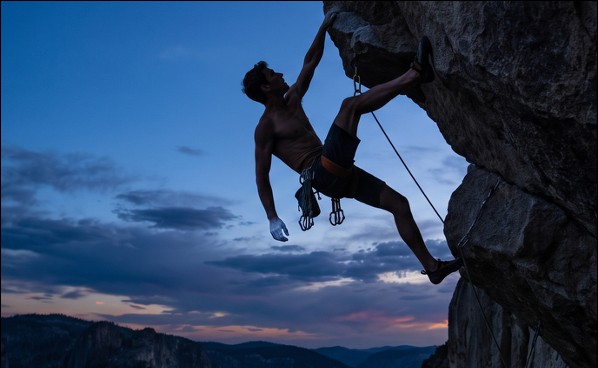
The hardest part of a climb usually isn’t the summit. It’s a single move somewhere in the middle, the spot where the next move isn’t obvious, you are physically exhausted, and staying where you are isn’t an option. Climbers call it the crux. It’s the moment that decides the outcome. Stall too long, second-guessing yourself, and you fall. Commit to the best decision for the conditions at hand, and you push through.
A lot of the systems we rely on: housing, insurance, the grid, the job market, the climate, aren’t what they were. None of it is collapsing this afternoon. But the default assumption that the institutions will sort it out has proved inaccurate and the trust misplaced. These factors setup our crux: the move we make determines whether our path leads towards capability, or leaves us dependent on the fractured systems we can feel straining around us.
How I got here
A word on why I’ve decided to develop these ideas in the book CRUX: Risk & Resilience. I didn’t arrive at this as some sort of dooms-day prepper. I came to it as someone who has spent a working life in energy systems, global supply chains, and building construction: watching fragile systems break and cascading failure turning small disruptions into unforeseen events.
Over my career, I learned to think in systems: model it, test interdependencies, anticipate the failure points, and work toward clear objectives with a firm understanding of the constraints.
I’ve spent the last 18 years in energy, close enough to the grid to understand how it actually works, and what happens when it doesn’t. I helped large companies add resilience with solar and efficiency across thousands of sites. As a residential contractor, I’ve applied these same structures and systems to making households more efficient and resilient.
My first drafts of the book were all about hardware and systems: energy, water, structures, food systems. The thing I’d substantially underweighted is that the single biggest indicator of resilience boils down to how well connected we are to the people around us. Community as a concept started as a footnote in my thinking; now it’s front and center. It can be as simple as learning a neighbor’s name.
What this is, and isn’t
Plainly: it isn’t about bunkers, or hoarding, or fear, and it isn’t about politics. I’m not going to tell you the world ends on a date. I don’t know the ‘if’ or the ‘when’ or the ‘how’ (and frankly I’m betting it doesn’t end… but there will certainly be disruption). It is about preparing for what’s already underway, the uneven and undeniable converging symptoms before us. This is about security through capability instead of dependence. Connection instead of isolation. Adaptation instead of hoping everything fixes itself.
The work sorts into four parts that reinforce each other: you (health, skills, the way you think), your household (food, water, power, money), your community (the people you can rely on), and the larger systems you can’t control, but can plan around.
Perhaps most importantly, because it’s the reason any of this is worth your time: you don’t have to bet on disaster to make these efforts worthwhile. Nearly every step you take toward resilience pays you back every day. A garden is a hedge against food-system disruption, but also a quiet hour outside, away from screens. Learning to fix things provides the satisfaction gained through competence. Knowing your neighbors is both emergency planning and an effective cure for too much isolation and too few interactions outside our usual information streams. Trade a little anxiety for a little action. You’ll sleep better. Not because you know what’s coming, but because you’ve started doing something about it.
I’ve come to think of it as the resilience dividend. It pays consistently, in calm years and rough ones alike.
The rules of the road
So you know what you’re signing up for:
No doomsday hype. I won’t trade in panic, and there will be no bunker fantasies. Fear isn’t an effective operating system.
Evidence over alarm. When I identify a shift or a pattern, I’ll show the data and name the source. When I’m speculating about a plausible scenario, I’ll say so.
Concrete over abstract. Most pieces end in something you could actually do this month, sized to a real budget or a real weekend.
I write what I’ve lived. I’ll stay mostly in what I know: building, energy, supply chains, and household systems. If I go outside the lines, I’ll flag it.
I focus on problems, not partisanship. The people I’m writing for span all walks of life and across the political spectrum. I intend to keep it that way by sticking to what can be supported through evidence and what has shown to work. Reliably.
I use analytical tools, including AI. Every day I’m amazed and wary in equal measure, the definition of ambivalent: “having mixed, conflicting, or contradictory feelings about something”. Nonetheless, it’s the biggest disruptor facing us today, and critical to understand how it is being used and what the implications are.
What to expect
Roughly weekly, I’ll publish field notes from work underway and results achieved; what went well and what I learned. And, periodically, I’ll take a harder look at a specific system under strain: insurance, fire, the grid, the money; as supported by evidence. I won’t leave you hanging in uncertainty or stewing in anxiety; every article will include a “what do I do now?” component, a resource, a link, a project, or a connection to strengthen your capability and mitigate against disruption.
Along these lines, there’s a free Resilience Snapshot at crux-works.com. It’s a fast way to see where your household stands today, and a decent place to start if you’re not sure where to look.
So that’s the crux of the matter. Whether there will be disruption isn’t really the question, there is always something. The question is how much capability you can cultivate to better position yourself before it gets here.
What’s your crux? What’s the move you keep circling but haven’t committed to? Make a deliberate assessment. Pick one thing and do it. Enjoy the calm and confidence that come with capability. Then pick another.
Glad you’re here. Let’s get to work.
— Brian